Independent field notes · Norway by road, ferry and foot
sprylfjordtals.com

Water crossing field notes

Villages Across the Fjord

The water is a transport corridor as well as the view. Choose your crossing deliberately, then give the places on either shore enough time to become more than a ferry queue.

ConfirmVehicle or passenger service
CheckExact quay and sailing date
Keep spareTime for the next departure

Not every boat carries your car

A route across a fjord may be a public vehicle ferry, a passenger express service or a sightseeing excursion. Each has different boarding arrangements, booking rules and luggage expectations. Before building a day around one, confirm what it carries and where it actually stops. Two nearby quays may serve entirely different routes.

A car ferry is often part of the road network, but that does not make the crossing instantaneous. Queues can outlast a sailing, and demand varies by time and season. Passenger services may have fewer departures and may not align with a convenient return. A sightseeing cruise can be an excellent experience without being the right transfer for your onward journey.

Check the operator’s current timetable for your travel date, including weekday, weekend and holiday differences. Do not rely on a timetable image saved from a previous year. If the next connection is essential, leave a margin that allows for a missed departure.
Compare the crossing before booking

Service categories, not guarantees for a particular route. Confirm details with the operator.
ServiceBest used forCheck before travel
Vehicle ferryContinuing a road journey across waterVehicle dimensions, lane instructions, payment and reservation rules
Passenger boatFoot-passenger links between served quaysExact stops, luggage, bicycle policy and onward transport
Sightseeing cruiseA planned scenic outingOne-way versus return ticket, boarding point and any connecting transfer

Accessibility arrangements vary by vessel and quay. Ask the operator about the particular sailing rather than assuming step-free access.

Give each village a purpose

These places are useful starting points for planning, not a recommended sequence to complete in one day.

Flåm and Aurland

Flåm is a transport hub at the head of Aurlandsfjord, with rail and boat connections that can bring concentrated visitor traffic. Aurland offers a different village setting nearby. Decide whether your stop is a transfer, a waterfront walk or an overnight stay; those require very different amounts of time.

Balestrand

Balestrand is a useful place to slow down on the northern side of Sognefjord. Walk the public waterfront and check local opening hours before depending on a particular café or attraction. A boat arrival is only helpful if accommodation and onward transport work with its schedule.

Solvorn and Urnes

Solvorn’s small-scale waterfront makes parking and respectful access especially important. A crossing toward Urnes can form a focused outing, but confirm the sailing and visiting arrangements separately. Urnes Stave Church has its own access information; a boat ticket is not an admission ticket.

Arrive at the quay ready

Read the signs before choosing a lane. Vehicle classes, destination lanes and boarding procedures can differ. Keep tickets or payment information available, follow crew instructions and stay alert when boarding starts. Do not leave a vehicle blocking a working lane while searching for a photograph.

If travelling on foot, identify the pedestrian boarding point and the last useful return before wandering away. Check whether the quay has shelter, toilets or somewhere to wait; facilities should not be assumed at smaller stops. Carry a warm layer even when the village feels mild, since time on an exposed deck can feel quite different.

For a rental vehicle, ask the rental company how ferry charges are handled. Understand whether charges are processed through an agreement or require direct payment, and check any administration fees in your rental terms. Avoid assuming that a previous traveller’s payment experience applies to your booking.

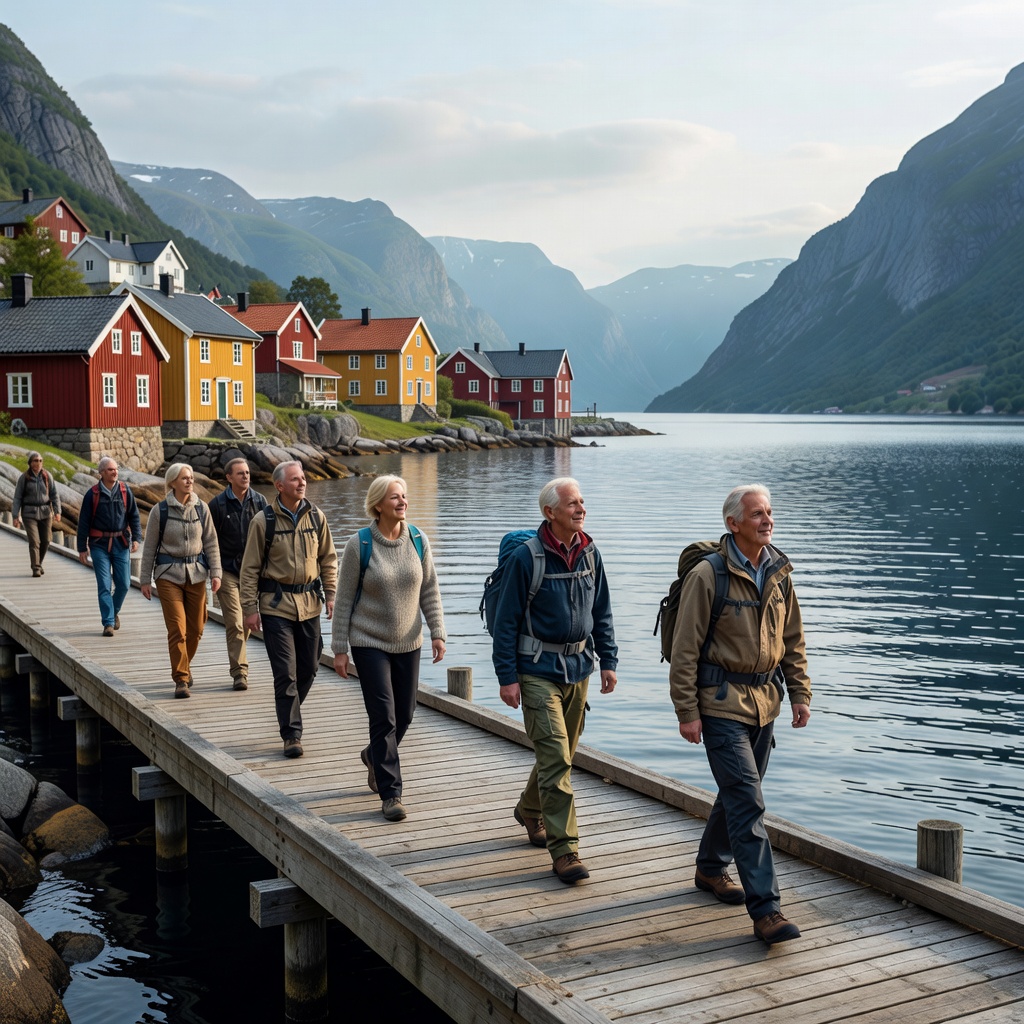
Travellers walking along a public village quay beside a Norwegian fjord in soft daylight
Stay on public waterfront routes and keep working berths, ramps and private entrances clear.

Let the water simplify the day

The most effective crossing is not always the shortest. A boat can remove a long drive, provide a natural break or lead to a village where staying overnight makes sense. It can also introduce a rigid departure into an otherwise flexible day. Choose consciously between those trade-offs.

Keep a fallback for the final sailing: an alternative road connection, an earlier departure or a different overnight stop. Do not assume that another boat will appear because a map shows a route. For public transport planning, start with Entur, then confirm operating details directly with the relevant operator.

Connect Your Travel Days